
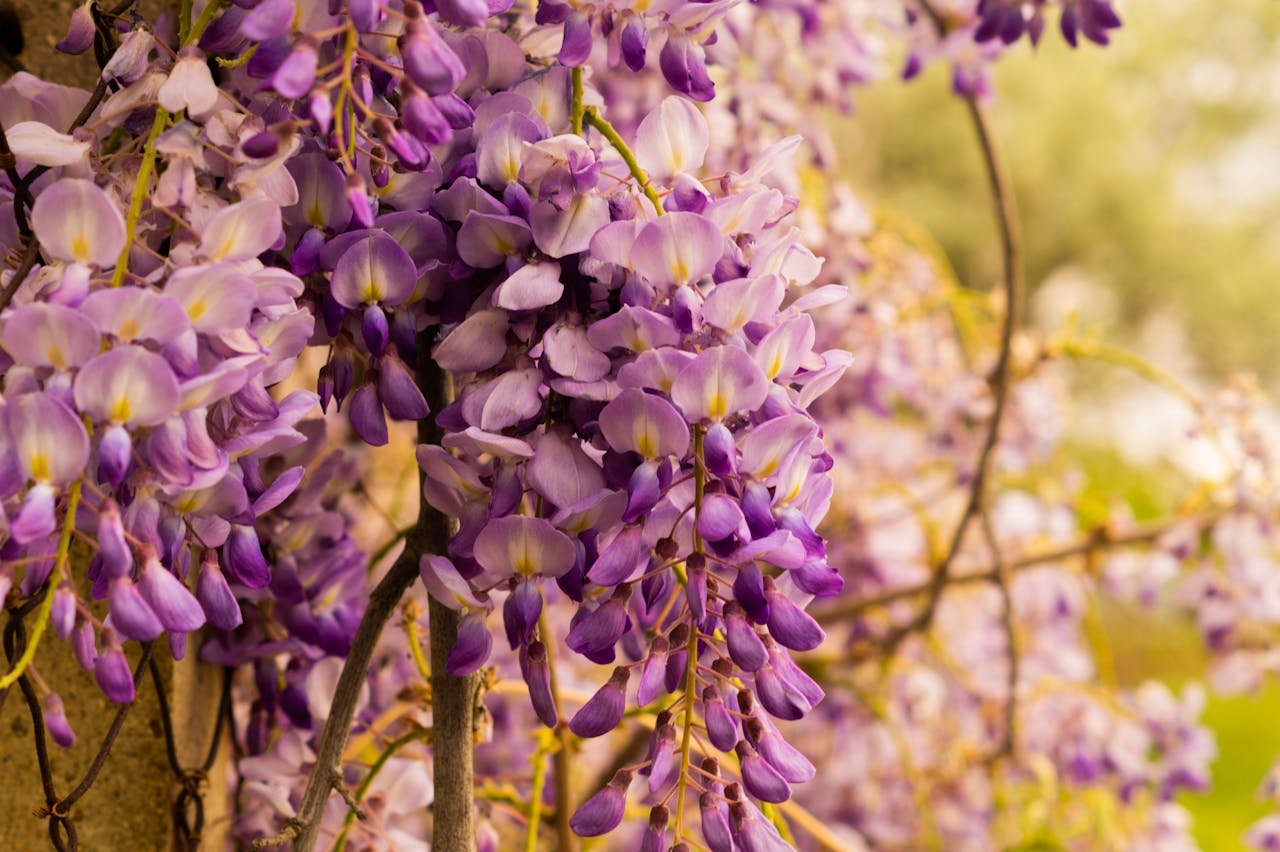
Cascading wisteria blooms are admired for their beauty, yet their message is often misunderstood. Are they a simple sign of romance, or do they carry deeper ideas such as devotion, longing, or rebirth? Misreading their symbolism can change the tone of a gift, bouquet, or garden design. In this article, you’ll discover the cultural roots and modern interpretations behind wisteria’s meaning, and how to use it thoughtfully.
Wisteria flower meaning and symbolism explained
The cultural significance of wisteria
The wisteria flower meaning is deeply rooted in different cultures, where it often represents longevity and endurance. In many Eastern traditions, especially in Japan, wisteria is associated with grace, respect, and honour, often seen decorating temples and gardens. Its cascading blooms symbolise the idea of humility, as the flowers naturally grow downward.
In Western contexts, the symbolism of wisteria can also be linked to romance and devotion, making it a popular choice in gardens designed to evoke elegance and emotional depth. The plant’s ability to thrive for decades reinforces its association with lasting bonds and resilience.
Emotional and spiritual symbolism
Beyond its cultural roots, the wisteria flower meaning carries strong emotional and spiritual connotations. It is often connected with personal growth and transformation, reflecting how the plant expands and climbs over time. This makes it a powerful symbol for those experiencing new beginnings or life transitions.
Spiritually, wisteria is thought to represent intuition and deeper awareness, encouraging reflection and inner peace. Its flowing clusters of blossoms evoke a sense of calm and surrender, which is why it is frequently used in spaces designed for meditation or relaxation.
Wisteria in love and relationships
In the context of relationships, the meaning of wisteria flowers is closely tied to devotion and deep affection. Its long, trailing vines can symbolise how love grows and extends over time, creating strong emotional connections. This is why wisteria is sometimes associated with enduring love and commitment.
At the same time, the plant’s delicate appearance paired with its vigorous growth reflects the balance between strength and sensitivity in relationships. Giving or planting wisteria can express a desire for lasting harmony and mutual respect, making it a meaningful gesture in both romantic and familial contexts.
Origins of wisteria symbolism across cultures
Wisteria in ancient Asian traditions
The origins of wisteria symbolism can be traced back to ancient Asia, particularly in China and Japan, where the plant held deep cultural meaning. In China, wisteria was associated with honour, respect, and scholarly achievement, often appearing in classical paintings and poetry. Its elegant form made it a symbol of refinement and intellectual grace.
In Japan, known as “fuji”, the flower became a powerful emblem of nobility and longevity. It was closely linked to the influential Fujiwara clan, whose name is derived from the wisteria plant. This connection reinforced the symbolism of prestige and enduring legacy, while the cascading blossoms also reflected humility and quiet strength.
The introduction of wisteria to the West
Wisteria was introduced to Europe and North America in the 18th and 19th centuries, where its meaning gradually evolved. Named after the American botanist Caspar Wistar, the plant quickly became popular in ornamental gardens. In Victorian England, flowers were often used to convey messages, and the wisteria flower symbolism came to represent romance, devotion, and aesthetic beauty.
The plant’s dramatic growth and long lifespan contributed to its association with enduring affection and emotional depth. As it spread across Western gardens, the meaning of wisteria expanded to include nostalgia and poetic inspiration, often featured in art and literature.
Mythological and poetic interpretations
Across cultures, the symbolism of wisteria has also been shaped by myth and artistic interpretation. Its flowing, almost dreamlike appearance has inspired associations with mystery, imagination, and the passage of time. In poetry, wisteria often symbolises ephemeral beauty, reminding us of life’s fleeting yet meaningful moments.
In some interpretations, the plant’s twisting vines represent complexity and interconnectedness, reflecting the intricate nature of human emotions and relationships. This layered symbolism continues to influence how the wisteria flower meaning is understood today, blending history, art, and cultural identity into one rich narrative.
Wisteria colour meanings: purple, white and blue
Purple wisteria symbolism
The purple wisteria meaning is the most recognised and is often linked to royalty, luxury, and spiritual awareness. This rich colour has long been associated with nobility and prestige, reflecting the plant’s historical ties to elite families such as the Fujiwara clan in Japan.
In addition, purple wisteria carries a strong sense of mystery and creativity, making it a symbol of imagination and artistic expression. It is also connected to deep admiration and respect, which is why it is often chosen for meaningful gifts or decorative settings that convey elegance.
White wisteria symbolism
The white wisteria meaning is closely associated with purity, innocence, and new beginnings. Its soft, delicate appearance makes it a powerful representation of spiritual clarity and peace, often used in spaces designed to promote calm and reflection.
White wisteria is also linked to fresh starts and renewal, making it particularly meaningful for life transitions such as weddings or personal milestones. The simplicity of its colour enhances its symbolism of honesty and sincerity, offering a quiet yet profound emotional message.
Blue wisteria symbolism
The blue wisteria meaning reflects tranquillity, trust, and emotional depth. This rarer shade evokes a sense of calm and stability, making it ideal for symbolising balanced relationships and inner harmony.
Blue wisteria is often associated with confidence and long-lasting connections, reinforcing themes of loyalty and mutual understanding. Its cool tones also suggest introspection and serenity, encouraging a deeper connection with one’s thoughts and emotions.
Wisteria in love, romance and relationships
A symbol of deep and lasting love
The wisteria meaning in love is strongly connected to enduring affection and long-term commitment. Its ability to grow and flourish for decades reflects the idea of love that strengthens over time, making it a powerful symbol for lasting relationships.
The plant’s cascading blooms also suggest abundance and emotional depth, representing a bond that continues to expand and evolve. This is why the symbolism of wisteria in romance is often linked to couples who value stability and a shared future.
Romantic gestures and emotional expression
In romantic contexts, the wisteria flower meaning can express devotion, admiration, and sincere feelings. Offering wisteria, whether as a plant or within a floral arrangement, conveys a message of deep emotional connection rather than fleeting attraction.
Its elegant and flowing appearance enhances its role as a symbol of graceful love and tenderness, making it ideal for meaningful gestures. The meaning of wisteria in relationships also highlights the importance of patience and nurturing, as strong love, like the plant itself, takes time to grow.
Balance between strength and sensitivity
The symbolism of wisteria in relationships reflects a unique balance between strength and delicacy. While the vines are robust and capable of climbing great heights, the flowers remain soft and fragile, symbolising the dual nature of love.
This contrast represents how healthy relationships combine emotional resilience with vulnerability, allowing partners to support each other while remaining open and authentic. The wisteria symbolism in love ultimately embodies harmony, mutual respect, and the beauty of growing together over time.
Wisteria spiritual meaning and life lessons
A symbol of spiritual growth and awakening
The wisteria spiritual meaning is closely linked to personal growth and inner awakening, reflecting the plant’s natural ability to climb and expand over time. This upward movement symbolises the journey towards higher awareness and self-discovery, encouraging individuals to evolve spiritually.
At the same time, the cascading flowers represent humility and surrender, reminding us that true growth often requires letting go of control. The spiritual symbolism of wisteria invites a balance between striving for progress and embracing the present moment.
Letting go and embracing change
One of the key life lessons associated with the meaning of wisteria is the importance of release and transformation. As the plant grows freely and adapts to its surroundings, it teaches the value of accepting change and trusting the process.
This symbolism encourages individuals to move past emotional burdens and make space for new beginnings and renewal. The wisteria flower meaning in this context highlights that growth often comes from periods of uncertainty, guiding us towards a more authentic path.
Patience, resilience and inner peace
The wisteria symbolism also reflects patience and resilience, as the plant can take years to fully bloom yet remains strong and enduring. This teaches an important life lesson: meaningful achievements and personal fulfilment require time and perseverance.
In addition, its soft, flowing blossoms evoke a sense of calm and inner peace, encouraging mindfulness and reflection. The spiritual meaning of wisteria ultimately reminds us to cultivate balance, remain grounded, and trust in the natural rhythm of life.
Wisteria in art, literature and popular traditions
Wisteria in visual art and aesthetics
The wisteria in art symbolism has long been associated with beauty, elegance, and refinement, making it a recurring subject in paintings and decorative arts. In East Asia, particularly in Japan, wisteria appears in traditional artworks such as ukiyo-e prints, where it represents grace and the passage of time. Artists have often been drawn to its flowing form, which conveys both movement and serenity.
In Western art, the symbolism of wisteria is linked to romanticism and nostalgia, frequently featured in garden scenes and architectural settings. Its cascading blossoms create a dreamlike atmosphere, reinforcing themes of poetic beauty and emotional depth.
Wisteria in literature and poetry
The wisteria flower meaning in literature often reflects ephemeral beauty and introspection, making it a powerful literary motif. Writers and poets use wisteria to evoke fleeting moments and emotional sensitivity, drawing parallels between the flower’s short bloom and the transient nature of life.
In both Eastern and Western poetry, the meaning of wisteria is associated with memory, longing, and quiet reflection. Its delicate appearance allows authors to explore themes of love, time, and impermanence, adding a subtle emotional layer to their work.
Wisteria in traditions and modern culture
In traditional festivals and cultural practices, the wisteria symbolism is often tied to celebration and seasonal change. In Japan, wisteria viewing is a cherished activity, where the flower represents renewal and natural harmony. Its presence in gardens and public spaces highlights its enduring cultural importance.
In modern culture, the wisteria meaning continues to evolve, appearing in films, design, and social media as a symbol of romance, tranquillity, and aesthetic beauty. Its timeless appeal ensures that it remains a meaningful and recognisable emblem across different forms of expression and tradition.
When to gift wisteria and what it implies
Ideal occasions to offer wisteria
The wisteria flower meaning as a gift makes it especially suitable for occasions that celebrate lasting bonds and meaningful milestones. It is often given for weddings, anniversaries, or housewarmings, where its symbolism of enduring love and longevity aligns perfectly with the moment.
Wisteria can also be offered during life transitions, such as a new job or personal achievement, as it represents growth, success, and new beginnings. Choosing this flower shows a thoughtful intention to honour both the present moment and the future ahead.
What gifting wisteria expresses
Giving wisteria conveys a message of deep affection and sincere appreciation, going beyond surface-level gestures. The meaning of wisteria as a gift often reflects respect, admiration, and emotional depth, making it ideal for expressing feelings that are strong yet understated.
It can also symbolise trust and long-term commitment, particularly in romantic or close personal relationships. The act of gifting wisteria suggests a desire to build or maintain a stable and meaningful connection over time.
Choosing the right context and colour
The symbolism of wisteria in gifting can vary depending on the context and colour, allowing for more personalised messages. Purple wisteria emphasises respect and admiration, while white conveys purity and new beginnings, and blue highlights trust and serenity.
Selecting the appropriate type of wisteria ensures that the gesture feels intentional and aligned with the occasion. The wisteria gift meaning ultimately lies in its ability to communicate lasting emotions, thoughtful intention, and a sense of harmony.